How to Check If a Charity or Fundraiser Is Real Before You Donate
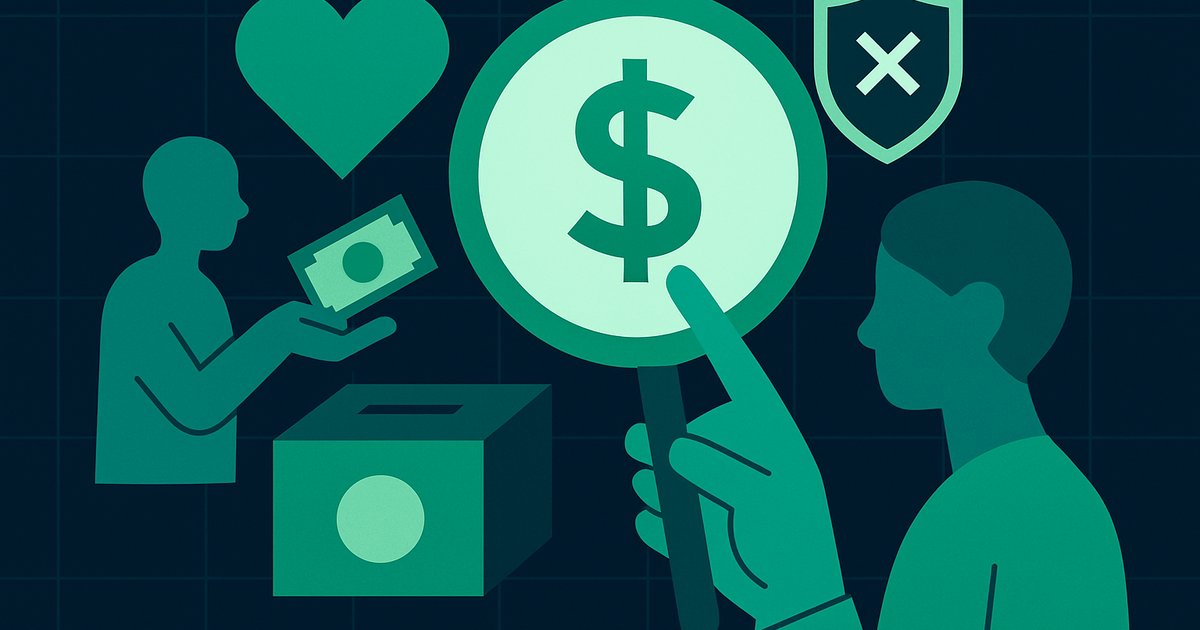
Every time there's a natural disaster, a medical emergency, or a viral story about someone in need, a wave of new fundraisers appears online almost overnight. Most are started by well-meaning people trying to help. But scammers watch for the same moments — and they know that urgency and emotion make people skip the due diligence they'd normally do before handing over money.
The good news is that verifying a charity or crowdfunding campaign doesn't require special tools or expertise. It takes about ten minutes, a few free databases, and a healthy dose of skepticism. Here's how to do it properly.
Step 1: Figure Out What Kind of "Charity" You're Actually Looking At
Before you can verify anything, you need to know which of two very different categories you're dealing with:
- A registered nonprofit organization (a 501(c)(3) in the U.S., or the equivalent charitable registration in other countries) — these are legally recognized entities subject to reporting requirements and oversight.
- A personal or informal fundraiser (like a GoFundMe, Facebook fundraiser, or crowdfunding page) — these are typically set up by an individual on behalf of themselves or someone else, and they carry far less oversight than a registered charity.
Both can be completely legitimate. But they require different verification steps, and confusing the two is exactly how scammers slip through — for example, by using charity-like language and imagery on a personal fundraising page that isn't actually a registered nonprofit at all.
Step 2: Verify a Registered Charity or Nonprofit
If an organization claims to be a nonprofit or asks for a tax-deductible donation, check it against public registries before giving.
Use the IRS Tax Exempt Organization Search (U.S.)
This free tool lets you confirm whether an organization currently holds tax-exempt status, view its filing history, and check its most recent Form 990 (the annual financial disclosure nonprofits must file). If a group claims 501(c)(3) status but doesn't appear here, that's a major red flag.
Check your state's charity registry
In the U.S., most states require charities that solicit donations to register with the state Attorney General's office or Secretary of State. These registries often flag organizations that have been suspended, are under investigation, or have failed to file required reports.
Cross-reference with independent charity watchdogs
Sites like Charity Navigator, the BBB Wise Giving Alliance, and Candid (formerly GuideStar) evaluate registered nonprofits on financial transparency, governance, and how efficiently they use donations. These aren't perfect scoring systems, but they're a strong second opinion, especially for lesser-known organizations.
Look for consistent, verifiable identity
A legitimate charity should have:
- A real physical address (not just a P.O. box)
- Named leadership or a board of directors you can look up independently
- A working phone number that's answered by a real person
- A domain name that matches its actual name (not a slight misspelling)
Watch for name confusion
Scammers frequently register names that are nearly identical to well-known charities — a swapped word order, an extra "Foundation," or a similar acronym. Always search the exact name plus the word "scam" or "complaint," and compare it letter-by-letter against the real organization's official site.
Step 3: Verify a GoFundMe or Crowdfunding Campaign
Personal fundraisers are harder to vet because there's no government registry for them — but there are still concrete steps you can take.
Check for platform verification features
Major platforms like GoFundMe have built protections over the years, including identity verification steps for organizers and a "Giving Guarantee" that covers donors in cases of confirmed misuse. Look for any verification badges or trust indicators the platform displays, and read the platform's own guarantee or refund policy before giving.
Understand who's actually running the campaign
Fundraisers are often set up by a friend or family member on behalf of the person in need, not by the beneficiary directly. That's normal and often necessary. But you should be able to find:
- A clear explanation of the organizer's relationship to the beneficiary
- The beneficiary's name confirmed somewhere independent of the fundraiser page (a news article, social media, a mutual connection)
- Updates over time, not just a single static post
Look for organic engagement
Real fundraisers tend to have comments from people who clearly know the person involved — mentions of shared history, specific details, tagged photos of real people. Scam pages often have generic comments, all posted in a short burst, or almost no engagement at all despite claiming urgency.
Reverse-search the photos
Take a photo from the campaign and run it through a reverse image search. It's a common scam tactic to lift a sympathetic photo of an injured child, a house fire, or a sick pet from an unrelated source or an older, unrelated story.
Search the story independently
If the fundraiser mentions a specific accident, diagnosis, fire, or disaster, search for local news coverage or public records that corroborate it. Real tragic events that inspire fundraisers are very often reported somewhere else too.
Step 4: Check the Organizer's Identity, Not Just the Story
This is the step people skip most often, and it's arguably the most important one.
- Look at the organizer's profile history. An account created days before the fundraiser went live, with no prior posts, friends, or activity, is a warning sign — especially if it's soliciting money for a stranger.
- Ask direct questions. A legitimate organizer will usually respond to a message asking for more detail, a way to verify the beneficiary, or clarification on how funds will be used. Evasiveness or pressure to "just donate now" is a red flag.
- Check for a consistent digital footprint. Real organizers tend to be findable — a LinkedIn profile, other social accounts, a professional or community connection to the beneficiary. A person who exists nowhere else online, tied to a page with no verifiable identity behind it, deserves extra scrutiny.
- Consider third-party verification for larger donations. If you're being asked to contribute a significant amount to an individual you don't personally know, it's reasonable to ask for some form of identity confirmation before sending money — the same instinct that applies to any high-value online transaction with a stranger.
Common Red Flags Across Charity and Fundraiser Scams
Regardless of whether you're looking at a nonprofit or a personal campaign, watch for these warning signs:
- Urgency and pressure. "Donate in the next hour" or "we'll lose funding if we don't hit this goal today" is a classic manipulation tactic.
- Unusual payment requests. Legitimate charities and platforms accept standard payment methods. Requests for gift cards, wire transfers, cryptocurrency, or cash sent by mail should immediately raise suspicion.
- Vague explanations of fund use. "Help the victims" with no specifics about who, where, or how the money will be spent is a soft spot scammers rely on.
- No verifiable contact information. No address, no working phone number, no named individuals behind the organization.
- Fresh, disaster-timed accounts. Pages, profiles, or entire organizations that appeared within days of a newsworthy tragedy, with no prior track record.
- Poor spelling, generic stock photos, and look-alike URLs. Small inconsistencies often reveal the whole operation.
- Unsolicited outreach. Be especially cautious of donation requests that arrive via cold text message, DM, or robocall — legitimate charities rarely solicit large donations this way out of the blue.
- Guaranteed tax deductions from an unregistered group. Only donations to verified tax-exempt organizations are deductible; anyone claiming otherwise without registry proof is misrepresenting the law.
Quick Pre-Donation Checklist
Before you give, run through this list:
- [ ] Confirmed the organization's name and status in an official registry (IRS, state AG, or equivalent)
- [ ] Checked an independent watchdog rating (Charity Navigator, BBB Wise Giving Alliance, Candid)
- [ ] Verified a real address, phone number, and named leadership
- [ ] For crowdfunding: confirmed the organizer's identity and relationship to the beneficiary
- [ ] Cross-checked the story via independent news or public sources
- [ ] Reverse-searched key photos
- [ ] Paid through a traceable, reversible method — never gift cards, wires, or crypto
- [ ] Trusted your instincts if something felt rushed, vague, or evasive
What to Do If You Suspect a Scam
If you find a fundraiser or charity that shows several of these red flags — or if you've already donated to one — report it. In the U.S., you can file a complaint with the Federal Trade Commission and your state Attorney General's charity registration office. If it's on a platform like GoFundMe, use their built-in reporting tools; most platforms take fraud reports seriously and can freeze suspicious campaigns quickly. If you paid by credit card, contact your card issuer about a chargeback as soon as possible.
The Bottom Line
Generosity shouldn't require blind trust. Whether you're giving to a decades-old nonprofit or a stranger's GoFundMe after a house fire, a few minutes of verification — checking registries, confirming identity, and watching for pressure tactics — is enough to separate the real requests from the fabricated ones. The people who genuinely need help are almost never the ones who mind you asking a few questions first.
Skip the manual digging. Proofile compiles a full public-data dossier on anyone in minutes: social profiles, photos, work history, and red flags. Run a free search on Proofile and see what's out there before you meet.
Don't just read about it, do it.
Proofile builds a full public-data dossier on anyone in minutes: social profiles, photos, work history, and red flags. They are never notified.
Run a free search →