How to Verify an Online Tutor or Coach: A Practical Safety Guide
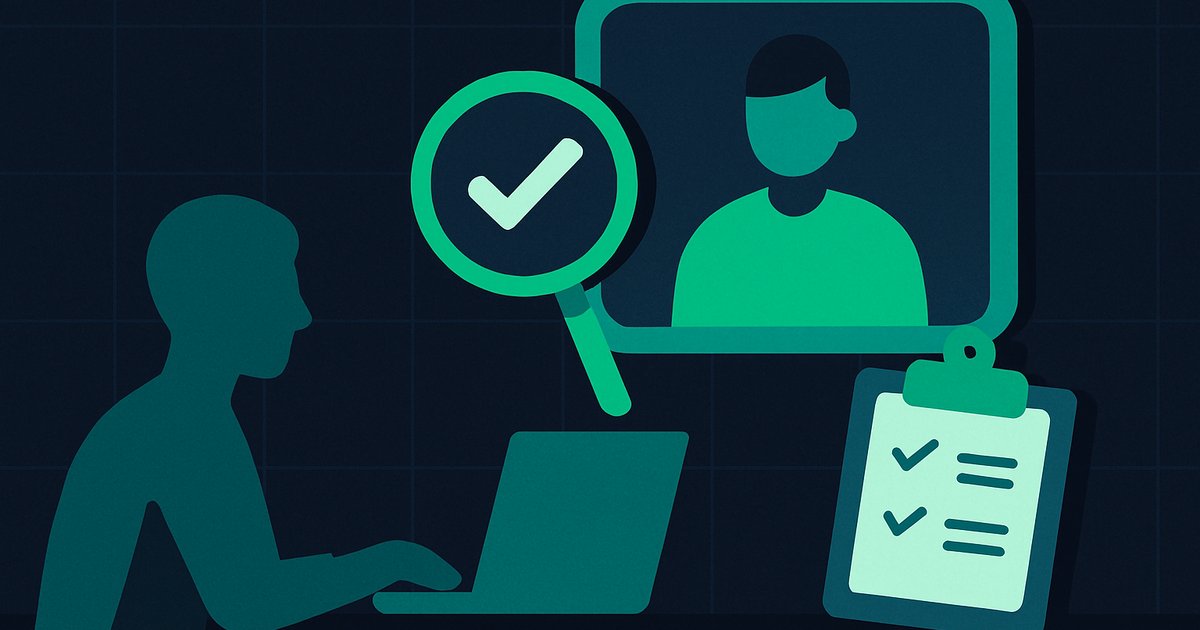
The shift to online learning has made it easier than ever to find a math tutor in another state, a coding mentor overseas, or a piano teacher who happens to live three time zones away. That convenience comes with a tradeoff: you're often hiring someone you've never met in person, based on a profile photo, a few reviews, and a résumé you can't independently confirm just by looking at it.
Whether you're hiring a tutor for yourself, a coach for a skill you're building, or an instructor for your child, verification isn't about being paranoid — it's about doing the same due diligence you'd naturally do if you were meeting someone face-to-face for the first time. Below is a practical framework for checking credentials, confirming identity, reading reviews critically, and adding extra safeguards when kids are involved.
Why Verification Matters More for Online Instruction
In a traditional classroom or studio, there are built-in checkpoints: an employer that ran a background check, a physical location, colleagues who can vouch for someone, and a paper trail tied to a real business. Independent online tutoring and coaching often strips away most of those checkpoints. Anyone can create a profile, list impressive-sounding credentials, and start taking students the same day.
That doesn't mean most online tutors and coaches are dishonest — the vast majority are legitimate professionals building a business the same way anyone else does. But the ease of entry means the responsibility for vetting shifts more heavily onto the parent, student, or client. A few minutes of verification upfront can prevent wasted money, wasted time, and in the worst cases, real safety risks.
Step 1: Verify Credentials, Not Just Claims
A profile that says "Certified Math Teacher" or "10 Years of Coaching Experience" is a claim, not proof. Treat credentials the way you'd treat a job candidate's résumé — worth checking, not worth assuming.
What to check:
- Degrees and certifications. Ask which institution issued the degree or certificate, and in what year. Many universities have alumni verification services or registrar offices that will confirm degree conferral for a small fee or with the graduate's consent.
- Teaching or coaching licenses. If the subject requires a professional license (teaching credential, coaching certification body, language proficiency certificate, fitness or sports coaching accreditation), check whether the issuing body has a public registry or lookup tool.
- Platform-verified badges. Some tutoring and coaching platforms independently verify degrees or run background checks before granting a "verified" badge. Understand what that badge actually means on the specific platform — verification standards vary widely, and some badges just confirm an email address.
- Subject-matter proof. For less formal skills (creative writing, music, coding, test prep), ask for a portfolio, writing samples, past student work, or a short recorded lesson sample. Genuine expertise is usually easy to demonstrate and hard to fake convincingly over time.
If a tutor is cagey about specifics — vague institution names, refusal to name a certifying body, or credentials that don't match the subject they're teaching — treat that as a signal to dig further, not a reason to assume the worst outright.
Step 2: Confirm Real Identity
Credentials only matter if you're confident they belong to the actual person you're talking to. Identity verification is a separate step from credential verification, and both matter.
Practical identity checks:
- Video call before booking. A live video conversation confirms the person matches their profile photo and can speak naturally about their background. Scammers and fake profiles are far more likely to avoid video or make excuses to delay it.
- Name consistency. Check that the name on the profile matches the name used in payment processing, email correspondence, and any certificates provided. Frequent name changes or inconsistencies across platforms are worth asking about directly.
- Government ID confirmation. Reputable tutoring platforms often verify ID during onboarding. If you're hiring independently (outside a platform), it's reasonable to ask for a redacted ID copy or a live ID check during a video call, especially for ongoing, paid, in-home, or child-facing arrangements.
- Digital footprint check. A quick search for the tutor's name alongside their stated credentials, employer, or city can help confirm they have an established, consistent online presence over time — a LinkedIn profile, a personal website, or professional social media that predates their tutoring profile. A brand-new identity with no history isn't automatically a red flag, but it does mean you should lean more heavily on the other verification steps.
- Third-party verification tools. Independent verification services can cross-check identity details, run consent-based background checks, and confirm that a name, address, and identity documents are internally consistent — useful when you want a second opinion beyond what a platform provides.
Step 3: Run a Background Check When It's Warranted
Not every tutoring relationship needs a formal background check — a one-off homework help session is different from a recurring, unsupervised arrangement with a minor. But when the stakes are higher, a background check is worth the modest cost and effort.
When to prioritize a background check:
- The instructor will work directly with a child, especially one-on-one or off-platform.
- Sessions will happen in person, in your home, or in an unsupervised setting.
- The arrangement is long-term and involves significant recurring payment.
- The tutor was found through an informal channel (social media, classified ad) rather than a vetted platform.
What a background check typically covers:
- Criminal history in relevant jurisdictions (keeping in mind that checks are usually limited to where someone has lived or worked, so ask about residency history for anyone you plan to check).
- Sex offender registry checks, particularly important for anyone working with minors.
- Identity confirmation tied to the name and address on file.
- In some cases, employment or education history verification bundled into the same check.
Be transparent about running a check — legitimate tutors and coaches generally understand and expect this, especially when children are involved, since responsible platforms often build background checks into their own vetting process anyway.
Step 4: Read Reviews Like an Investigator, Not a Consumer
Reviews are useful, but they're also the easiest part of a profile to manipulate. A handful of glowing five-star reviews posted within days of each other, all written in similar language, should raise an eyebrow rather than provide comfort.
How to analyze reviews critically:
- Look at volume and pacing. A steady trickle of reviews over months or years reads differently than a sudden burst. Clusters of reviews posted in a short window can indicate incentivized or fabricated feedback.
- Read the negative and middling reviews first. Five-star reviews tend to be generic ("Great tutor, highly recommend!"). Three-star and critical reviews usually contain more specific, useful detail — about punctuality, communication style, or whether the tutor delivered on what was promised.
- Check for specificity. Reviews that mention particular lessons, topics covered, or measurable progress ("helped my son go from a C to a B in algebra over one semester") are harder to fake than vague praise.
- Cross-reference across platforms. If a tutor is listed on multiple platforms or has a personal website, compare review patterns. A tutor with years of consistent, detailed reviews across several independent sources is more credible than one with reviews confined to a single platform they might have more control over.
- Watch for review-only accounts. On platforms where reviewer profiles are visible, check whether the reviewer has any activity beyond that one review. A wave of accounts that exist solely to leave a single glowing review is a common manipulation tactic.
Step 5: Use Platform Safety Features — And Understand Their Limits
If you're booking through an established tutoring or coaching marketplace, take advantage of the safety infrastructure it offers, but don't assume it covers everything.
- Keep communication and payment on-platform. Tutors who quickly push to move chats to personal email, text, or off-platform payment apps are avoiding the platform's monitoring, dispute resolution, and payment protection — a common tactic among people trying to bypass verification or avoid accountability.
- Use session recording or transcript features when available, especially for younger students. Many platforms offer optional recording for both safety and quality assurance.
- Check the platform's own vetting policy. Ask directly (or read their trust and safety page) what "verified" actually means: Is it ID verification only? Credential checks? Criminal background screening? Platforms vary enormously here, and the label "verified tutor" can mean very different things depending on where you're looking.
Extra Precautions When the Student Is a Child
Verifying an adult coach for yourself is one level of diligence. Verifying someone who will spend time with your child — even virtually — deserves a higher bar.
- Sit in on the first few sessions, or at minimum stay within earshot in the same house, particularly for younger children.
- Insist on video-on sessions rather than audio-only or chat-based lessons, so you (or your child) can confirm the same person shows up consistently.
- Ask about the platform's child-safety policy specifically — some platforms have separate, stricter verification requirements for tutors who work with minors, including mandatory background checks and additional ID confirmation.
- Set communication boundaries in writing, including that all contact happens through the platform or a shared family email/calendar, not a tutor's personal number or social media.
- Talk to your child directly after early sessions about how the tutor made them feel and whether anything felt off. Kids often pick up on discomfort before adults do, but only if asked open-ended questions rather than yes/no ones.
- Trust your instincts over convenience. A tutor who's reluctant to be on video, resistant to background checks, or pushes to communicate off-platform is not worth the schedule flexibility or lower price.
A Quick Verification Checklist
Before your first paid session, you should be able to check off:
- [ ] Confirmed the tutor's real name matches their ID, payment details, and any credentials provided
- [ ] Had at least one live video conversation
- [ ] Verified at least one core credential (degree, certification, license) with the issuing institution or a documented sample of work
- [ ] Read a spread of reviews, including critical ones, across more than one source if possible
- [ ] Confirmed the platform's actual verification and background-check policy (not just the badge)
- [ ] Run or requested a background check if the arrangement involves a child, in-person contact, or long-term commitment
- [ ] Agreed to keep communication and payment within the platform, or set clear off-platform boundaries in writing
The Bottom Line
Verifying an online tutor, coach, or instructor isn't about assuming the worst of every profile you see — it's about replacing the informal trust cues of in-person hiring (a physical office, a mutual acquaintance, a face you recognize from the neighborhood) with a deliberate, repeatable process. Confirm identity independently of the platform's marketing claims, verify credentials at the source rather than taking a profile's word for it, read reviews with a critical eye toward patterns rather than star ratings, and add background checks and extra observation whenever a child is involved.
The goal isn't to eliminate all risk — no verification process can promise that — but to make sure you've done the reasonable, available checks before handing over your trust, your payment information, and, in many cases, time with your child.
Skip the manual digging. Proofile compiles a full public-data dossier on anyone in minutes: social profiles, photos, work history, and red flags. Run a free search on Proofile and see what's out there before you meet.
Don't just read about it, do it.
Proofile builds a full public-data dossier on anyone in minutes: social profiles, photos, work history, and red flags. They are never notified.
Run a free search →